Growing Up Between Pressure and Possibility
Juan Rojas did not grow up expecting boxing to define his life. Born in Pennsylvania, Rojas moved to California at the age of eight when his mother decided to relocate the family to South El Monte in search of better opportunities.
“I moved over here when I was eight, but I was actually born in Pennsylvania,” Rojas said. “We had visited California like a month before we moved, and I liked it. It was better than over there.”
The move placed Rojas in a new environment that offered both opportunity and risk. He grew up in the Klingerman apartments, an area long associated with economic hardship and social challenges. Rojas was raised by his mother, who is from Guerrero, Mexico, and worked long hours to support the family.
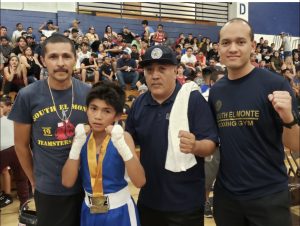
“She works really hard,” Rojas said. “Half the day. She comes home late at night. She’s tired.”
Rojas’ father was largely absent from his life, a reality that forced him to mature early. Without a consistent male role model, he struggled to manage his emotions as a child.
“I never really had an older person in my life or someone to look up to,” he said. “I had to kind of do things on my own.”
As a young student, that absence often showed itself through anger and poor decision-making.
“When I was younger, I got into a lot of trouble,” Rojas said. “I had a lot of anger issues.”
Those struggles placed him at a crossroads familiar to many students growing up in similar circumstances. Without intervention, the consequences could have been severe. Instead, his mother made a decision that redirected his life.
Boxing as Discipline, Not Escape
Rojas was introduced to boxing at the age of nine, not as a career choice but as a way to channel anger into something constructive.
“She just wanted something for me to get the anger out,” Rojas said. “And I’m very grateful she did, because it helped me see things way better than before.”
From the beginning, boxing provided structure and accountability. Training demanded consistency, patience, and respect. Over time, Rojas learned that success in the sport requires far more than aggression.
“Fighting is just aggressive,” Rojas explained. “Boxing is art.”
He described boxing as a sport built on strategy, timing, and control rather than emotion.
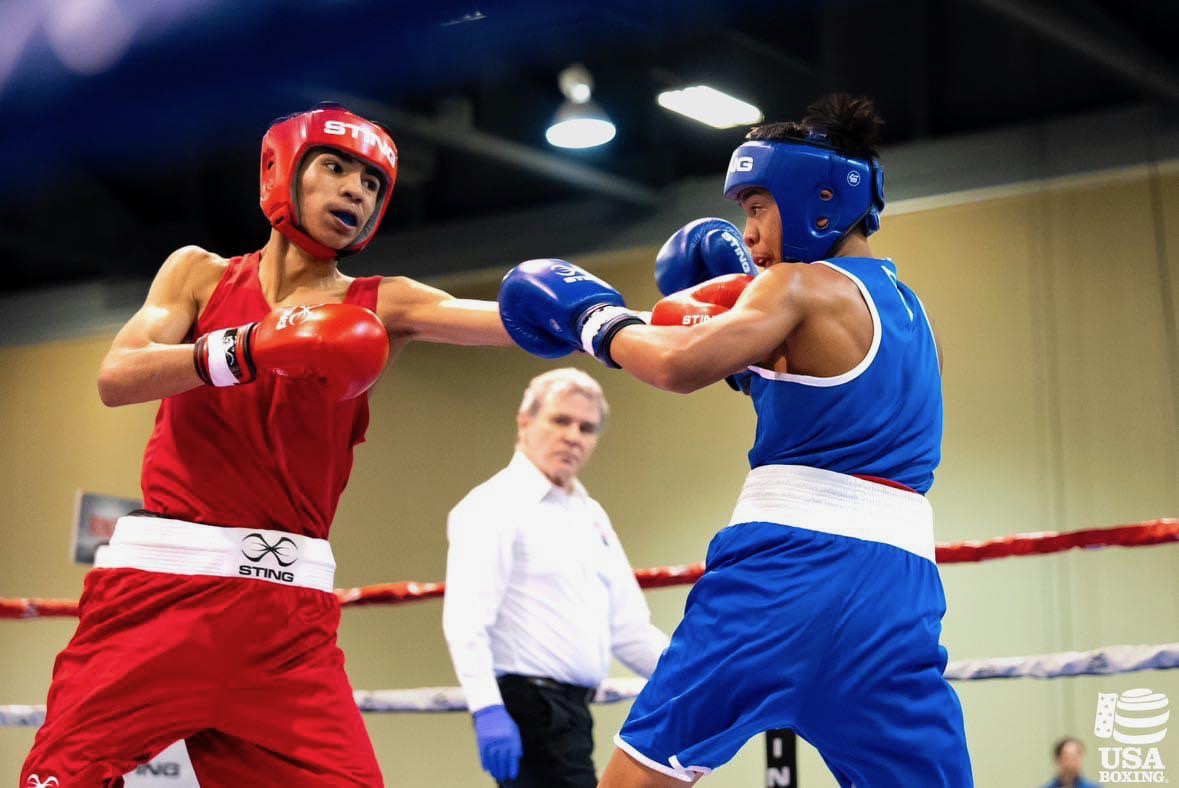
“You gotta have defense and setups,” he said. “You gotta hit and not get hit.”
As his experience grew, Rojas shifted his focus from power to technique. He now approaches each fight with intention, aiming to make outcomes clear rather than relying on judges’ decisions.
“I’ve learned to think more before just throwing punches crazy,” he said. “I try to become more of a clean fighter and not give the fight to the judges.”
Rojas’ amateur record stands at 42 wins and 10 losses, reflecting years of competition and discipline. He has faced difficult opponents and experienced defeat, including at national tournaments.
“I remember one national tournament,” he said. “I fought the best guy in the bracket. I was nervous. During the fight I already knew I lost.”
Rather than discouraging him, those experiences strengthened his resolve. Rojas identified his jab as his greatest strength, using it to control distance and set up combinations.
“My jab is probably my best punch,” he said. “I throw it like 100 times in a fight.”
At the same time, he remains aware of areas for growth, including improving his head movement, which he continues to work on in training.
Fighting for the Future
Rojas recently qualified for a national amateur boxing tournament in Kansas City after advancing through a months-long series of district, state, and regional competitions.
“For this tournament, it’s a three-month tournament,” Rojas said. “You gotta win districts, then states, then regionals.”
 The opportunity represents a significant milestone, but Rojas remains focused on preparation rather than expectations. When asked what motivates him through difficult training sessions, his answer is immediate.
“My mom,” he said. “I always told her I’m gonna make it out.”
That motivation is rooted in gratitude and responsibility. Rojas hopes to provide financial stability for his mother in the future.
“Buy her a house and buy her a car,” he said. “All the money and all the effort she puts into me pushes me to put the effort in too.”
Rojas also credits his coach for providing mentorship beyond boxing and his girlfriend for encouraging him to stay focused and avoid negative influences.
“She helped me focus on what I really want,” he said. “She sees something in me that other people don’t.”
Outside of boxing, Rojas keeps a low profile. He enjoys playing video games, spending time with supportive people, and avoiding environments that could distract him from his goals.
“I don’t really like going outside no more,” he said. “Because of all the bad stuff.”
As a student at South El Monte High School and an amateur boxer with national aspirations, Rojas understands that his journey is still unfolding. His future in the sport is uncertain, but his direction is clear.
Boxing has given him discipline, structure, and purpose. More importantly, it has given him a way to redefine what success looks like for a young man growing up in a challenging environment.
Each time Juan Rojas steps into the ring, he carries more than ambition. He carries the sacrifices of a single mother, the lessons learned from loss, and the determination to build a future shaped not by circumstance, but by choice.